
Nebraska’s 3-Foot Rule for Bicycles: What Happens When Drivers Don’t Give You Enough Room
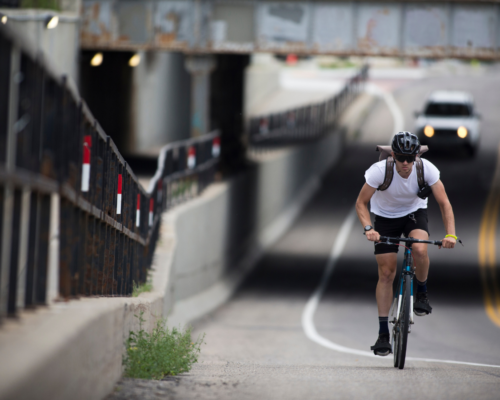
In Nebraska, motorists and cyclists have important rights and responsibilities under state traffic laws. For example, the 3-foot law requires drivers to provide adequate space when passing a person riding a bicycle. It is designed to protect cyclists and help prevent catastrophic injuries.
Unfortunately, many drivers fail to follow this rule. Unsafe passing can result in devastating crashes, severe injuries, and complicated legal disputes.
Jason Bottlinger is an experienced bicycle accident lawyer in Omaha. At Bottlinger Law L.L.C., we help injured cyclists pursue full compensation to cover the cost medical bills, lost wages, and other expenses caused by negligent drivers.
What Is Nebraska’s 3-Foot Bicycle Law?
The 3-foot bicycle law recognizes that cyclists are particularly vulnerable road users. That’s why motorists who pass a bicycle traveling in the same direction must leave at least three feet of clearance between their vehicle and the bicyclist. This rule applies when a driver overtakes a cyclist on the roadway, and it is intended to reduce the risk of dangerous side-swipe crashes.
Unlike motorists, cyclists have little physical protection during a crash. Even a minor impact or sudden maneuver by a vehicle can lead to catastrophic injuries.
Drivers passing cyclists Nebraska law requires motorists to:
- Leave a minimum of three feet between their vehicle and the bicyclist
- Pass only when it is safe to do so
- Avoid returning to the lane until the cyclist is safely cleared
Where the 3-Foot Rule Applies in Nebraska
The 3-Foot Rule applies on city streets, rural roads, and shared lanes where bicycles are legally allowed to travel.
City Streets
In urban areas, cyclists often share lanes with cars and trucks. Drivers must still provide three feet of clearance when passing, even when traffic is heavy or lanes are narrow. If the driver cannot pass safely with adequate space, they are expected to slow down and wait until the lane clears.
Rural Roads
Many bicycle crashes occur on rural roads where vehicles travel at higher speeds. When drivers attempt to pass cyclists quickly without leaving enough space, the risk of a severe crash increases dramatically. On these roads, drivers must be especially cautious because high-speed passing can create dangerous air pressure that destabilizes cyclists.
Shared Lanes
Nebraska law recognizes that bicycles have the right to use the roadway. In shared lanes where no separate bike lane exists, cyclists may ride in a position that is visible and safe. Drivers still must follow the three-foot passing rule, even if the cyclist is traveling near the center of the lane to avoid road hazards.
How Drivers Violate the 3-Foot Rule
Despite the clarity of the law, many bicycle accidents happen because drivers ignore the law or they misunderstand the required clearance.
Some of the most common violations include:
- Speeding While Passing. Drivers sometimes attempt to pass cyclists quickly to avoid slowing down. When vehicles pass too closely at high speeds, the cyclist may be struck by the mirror or pushed off balance by air turbulence.
- Distracted Driving. Drivers who are texting, adjusting navigation systems, or otherwise distracted may not see a cyclist until it is too late to pass safely. These situations can lead to failure to yield to bicyclists, a common factor in many crashes.
- Aggressive Driving. Some drivers become impatient when sharing the road with cyclists. Aggressive passing, such as squeezing by without changing lanes, may violate Nebraska’s 3-foot rule and puts cyclists at serious risk.
- Misjudging Distance. Even drivers who intend to pass safely can miscalculate the space between their vehicle and the cyclist. When this happens, the cyclist could be forced dangerously close to parked cars, curbs, road shoulders, and other hazards.
How Unsafe Passing Leads to Bicycle Accidents
Unsafe passing is a major cause of bicycle accident injuries. Even when a vehicle does not directly strike a cyclist, a driver’s actions may still cause a crash.
Side-Swipe Collisions
These crashes occur when a vehicle passes too closely and physically hits the cyclist. Even a small impact can send a rider crashing to the pavement.
Forced Run-Offs
Sometimes drivers pass so close that cyclists must veer off the roadway to avoid being hit. When riders lose control on gravel shoulders or uneven surfaces, serious injuries can occur.
Evasive Maneuvers
Cyclists may brake suddenly or swerve to avoid a passing vehicle. These reactions can cause collisions with other vehicles, road hazards, or stationary objects.
Using the 3-Foot Rule to Prove Negligence
When a driver fails to follow Nebraska traffic laws for cyclists, that violation may serve as evidence of negligence in an Omaha personal injury claim. A bicycle accident lawyer may evidence of the violation to show that the driver failed to follow established safety laws.
In legal terms, negligence occurs when a driver fails to act with reasonable care and causes injury to another person. If a motorist violates the 3-foot bicycle law by passing too closely, that behavior can help demonstrate that the driver acted negligently.
Evidence That Can Prove Unsafe Passing
Proving that a driver violated the 3-foot rule often requires careful investigation. Several types of evidence may help show that the motorist failed to give adequate space.
- Police Reports. Officers responding to the scene may document important details such as vehicle position, roadway conditions, and statements from those involved.
- Witness Statements. Eyewitnesses who saw the crash may describe how the driver passed the cyclist.
- Roadway Measurements. Investigators may measure lane widths, shoulder space, and vehicle positioning to determine whether the driver had enough room to pass safely.
- Video Evidence. Dash cameras, traffic cameras, or nearby surveillance systems may capture footage of the crash or the passing maneuver.
FAQs About Nebraska’s 3-Foot Rule for Bicycles
What is Nebraska’s 3-foot bicycle law?
Nebraska’s 3-foot bicycle law requires drivers to leave at least three feet of space between their vehicle and a bicyclist when passing in the same direction.
When does the 3-foot passing rule apply?
The rule applies whenever a driver overtakes a bicyclist traveling in the same direction on a roadway. This includes city streets, rural highways, and shared lanes where bicycles are legally allowed to ride.
What happens if a driver passes a cyclist too closely?
Passing a cyclist without providing at least three feet of space may be considered a violation of Nebraska traffic laws. If the unsafe pass causes a crash, the driver may be held legally responsible for the cyclist’s injuries and other damages.
Can violating the 3-foot rule be used as evidence in a lawsuit?
Yes. If a driver violates the 3-foot passing rule and causes a crash, that violation may help demonstrate negligence in a personal injury case. Evidence such as police reports, witness statements, and roadway measurements may help show that the driver failed to give the cyclist adequate space.
Speak With a Trusted Omaha Bike Accident Attorney Today
At Bottlinger Law L.L.C., we represent people who have been injured due to the negligence of others, including cyclists who are harmed by drivers that fail to follow safety laws.
Expertise named our firm as one of the best Personal Injury Attorneys serving Omaha, and Jason Bottlinger belongs to the exclusive Multi-Million Dollar Advocates Forum. We also have a perfect A+ rating from the Better Business Bureau.
Call (402) 505-8234 to schedule a free consultation today.
Bottlinger Law
Consultation Form
Our legal team is ready to help. Please fill out the form below to set up a free consultation with the Bottlinger Law team.
Injured by an Uninsured Driver in Omaha? How Uninsured Motorist Claims Work
When a Loved One Dies in a Workplace Accident: Understanding Your Legal Options in Bellevue
Was Your Loved One Killed by a Fatigued Trucker? Proving Hours-of-Service Violations in Bellevue
7 Reasons to Let Your Lawyer Talk to the Insurance Company After a Car Accident in Bellevue